
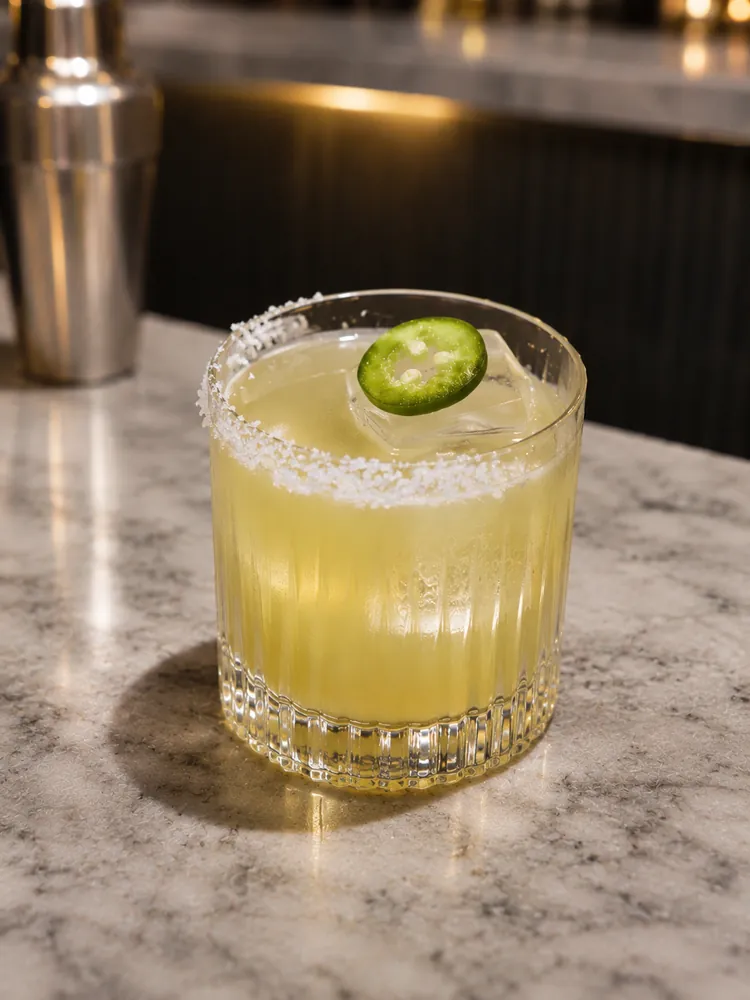
A cocktail garnish should add aroma, flavour or texture, not just decoration, and the glass should suit the drink: coupes for shaken drinks served up, rocks glasses for short drinks over ice, highballs for long drinks. Fresh citrus peel, herbs and a salted or sugared rim are the most useful finishes.
Cocktail garnishes and glassware are the finishing touches that make a drink look and smell considered. Alejandro Nicolau, a London private chef trained under Martin Berasategui, works with bartenders at events across London, where how a drink looks and smells on arrival matters as much as how it tastes. This guide explains the thinking behind garnish and glass choices.
01Why do cocktail garnishes matter?
A garnish is the first thing guests see and often the first thing they smell. A twist of citrus peel releases oils over the surface; a sprig of rosemary adds aroma at each sip. Done well, it changes how the drink tastes.
Done badly, it is decoration that gets in the way. The rule bartenders follow is simple: if it does not add something to the drink, it does not belong on it.
02What are the most useful cocktail garnishes?
- Citrus peel or twist: expressed over the drink so the oils land on the surface, then placed in or on the glass.
- Fresh herbs: mint, rosemary and thyme, slapped lightly to release aroma before placing.
- Rims of salt or sugar: salt for margarita-style drinks, sugar for sours, applied to half the rim so guests can choose.
- Slices of fruit or chilli: a slice of lime, a ring of jalapeño or a dried citrus wheel add flavour and a visual cue.
- Edible flowers: light and decorative, best on delicate, floral drinks.
Keep the number of garnishes small. One strong garnish is more elegant than three average ones.
03Which glass for which cocktail?
- Coupe or Nick and Nora: shaken or stirred drinks served without ice, such as sours and martinis.
- Rocks (old fashioned) glass: short drinks over ice, such as an old fashioned or a margarita on the rocks.
- Highball or Collins glass: long drinks with soda or tonic.
- Flute: sparkling cocktails and Champagne-based welcome drinks.
- Wine glass: spritzes and large, ice-heavy serves.
Chill glasses before service. A cold glass keeps the drink at the right temperature for longer and makes a visible difference to a short-served drink.
04How should ice be used?
Ice is the most underrated ingredient. Large, clear cubes melt slowly and keep drinks cold without diluting them too fast; crushed ice suits tiki-style and julep drinks.
At events, plan more ice than you think: for a party, many bartenders plan around half a kilo per guest as a starting point, adjusting for the weather and the drinks.
05How do you plan garnishes for an event?
- Choose the menu first, then work out which garnishes it needs.
- Prepare citrus peels, slices and herbs in advance and keep them chilled and covered.
- Chill glassware and have clean spares ready.
- Set up a consistent station so every drink leaves the bar looking the same.
- Keep a few spare garnishes for corrections.
A bartender will usually do this setup before guests arrive. See bar and cocktail hire for how the service works.
06How do garnishes work with food?
At a dinner, garnishes can echo the menu: a rosemary sprig with a roast, citrus peel with seafood, or chilli with a spiced dish. That connection makes the bar feel part of the event rather than separate from it.
This is easiest when the chef and bartender plan together, as they do for events at the bar and cocktail service. See welcome cocktail ideas for events for pairing thoughts.
07How do garnishes change by season?
A seasonal garnish ties the drink to the time of year and uses ingredients at their best.
- Spring: mint, edible flowers and thin strips of cucumber or rhubarb.
- Summer: berries, basil, peach slices and lime wheels.
- Autumn: baked apple slices, cinnamon sticks and thyme.
- Winter: orange peel, rosemary and dried citrus, which suit festive drinks.
Using the same ingredients as the menu also helps the bar and kitchen feel connected at a dinner.
08What mistakes should you avoid?
Most garnish mistakes come from doing too much or preparing too far ahead.
- Garnishes that block the drinker from sipping, such as large skewers over a small glass.
- Herbs that have wilted because they were cut too early.
- Warm glassware that makes a short drink flat in minutes.
- Too many different garnishes across the menu, which slows service and looks cluttered.
- Rims applied to the whole glass, leaving guests with no choice.
Keeping it simple and fresh is usually the sign of an experienced bar.
09How do you finish drinks well at home?
- Chill the glasses and use fresh ice.
- Use fresh citrus and herbs, not ones that have sat out.
- Rim half the glass so guests choose.
- Garnish at the last moment, so aroma is fresh.
- Keep one garnish per drink.
If you are planning a larger party and want the bar and kitchen handled together, send the date and guest numbers through the enquiry form.
Planning an event and want the food and drinks taken care of? Send the date, guest count and any requirements through the enquiry form and the team will reply within 24 hours.
Plan Your EventExplore: bar and cocktail hire, Bar & Cocktails, private chef for dinner parties.