
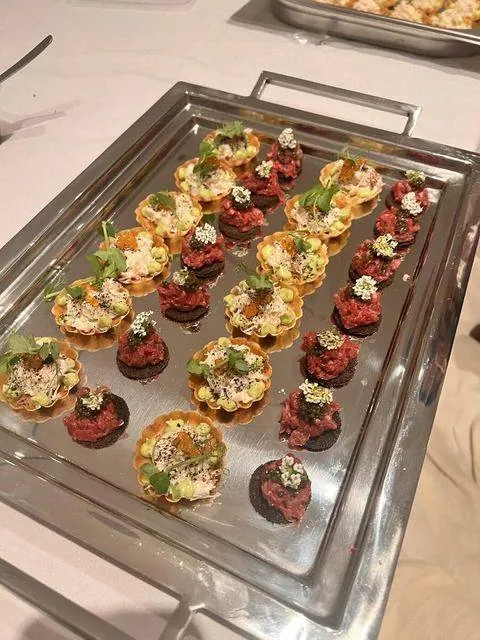
"Pintxos" and "tapas" get used interchangeably outside Spain, but they're genuinely distinct traditions, each with its own history, style, and etiquette — and understanding the difference makes for a much better menu.
01What tapas actually means
Tapas is the broader, more widely known term — small dishes shared across a table, often eaten with drinks, associated with regions across Spain. Tapas can be hot or cold, served on a plate, and shared communally rather than eaten individually.
02What makes pintxos different
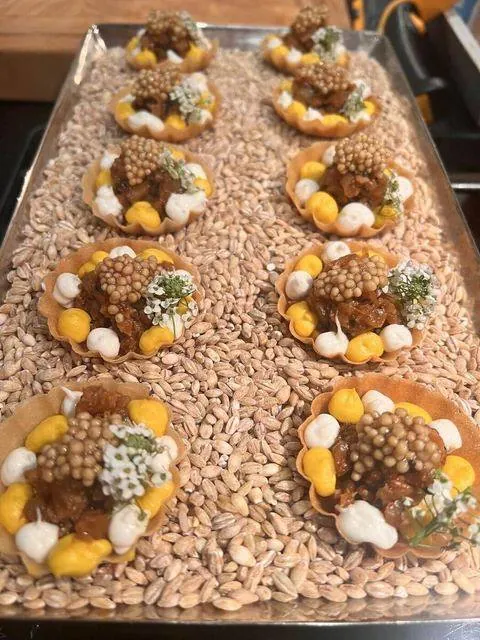
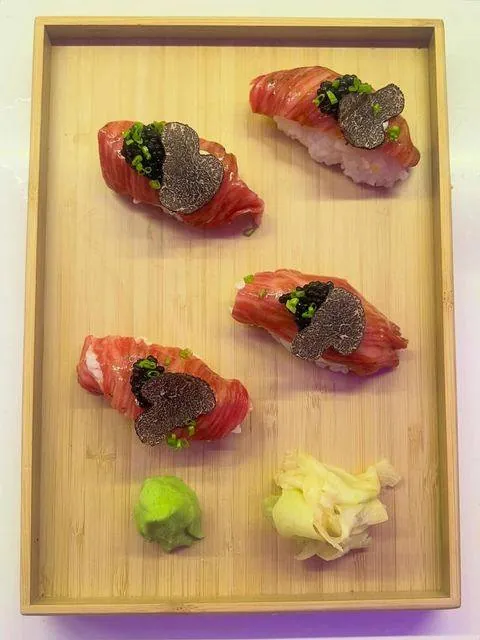
Pintxos come specifically from the Basque Country, in Spain's north — including San Sebastián, where much of this tradition is formalised into an art form. A pintxo is typically an individual bite, often skewered or balanced on a slice of bread, designed to be eaten in one or two mouthfuls rather than shared.
03The etiquette is different too
In traditional Basque bars, pintxos are laid out along the counter, and guests help themselves, keeping track of how many they've eaten (often by the toothpicks left on the plate) to settle the bill at the end. It's a far more individual, grazing-style experience than a shared tapas plate passed around a table.
04Why the distinction matters for a private menu
Knowing which tradition a dish comes from shapes how it's plated and served at a private event — pintxos as elegant individual canapés circulating among guests, tapas as shared plates at the centre of the table. A well-designed Spanish menu uses both intentionally, not interchangeably.
05Bringing both into one event
A strong Spanish-themed evening often opens with pintxos as a welcome course — mirroring how the canapé service works for other menus — before moving into shared tapas and a paella course as the meal progresses.
06Why Getting This Right Matters for Your Guests' Experience
Guests who have spent time in Spain, particularly the Basque Country, will notice immediately if pintxos are served incorrectly — as a shared plate rather than individual bites, for example. Getting the format and presentation right isn't a small detail; it's part of what makes an evening feel genuinely authentic rather than a loose, generic approximation of "Spanish food." This attention to correct tradition is exactly what separates a well-researched menu from one built on surface-level familiarity with the cuisine.
07A Quick Way to Remember the Distinction
If it helps to have a simple memory aid: pintxos are individual, often skewered or on bread, and specifically Basque; tapas are the broader, shared-plate tradition found across the whole of Spain. Keeping this distinction in mind is a small detail that makes a real difference to how authentic a Spanish-themed menu actually feels.
08Small Details, Big Difference
Understanding this distinction is a small piece of knowledge that pays off disproportionately in how authentic and considered a Spanish-themed menu ultimately feels to guests who know the difference.
09A Fun Detail to Share With Your Guests
Many hosts enjoy briefly explaining this distinction to guests as the pintxos course arrives — a small, engaging piece of context that adds to the overall experience and shows genuine thought went into the menu beyond just serving nice food.
10How to use both at a party
For a Spanish-themed evening, pintxos are ideal when guests are standing and mingling, because each bite is complete on its own. Tapas suit a seated table where plates are shared and replenished gradually. Many hosts combine them: pintxos with welcome drinks, then a succession of tapas to the table, followed by a larger dish such as paella. This structure gives the evening a natural rhythm and lets guests taste a wide range of Spanish flavours without any single course feeling heavy.
Want a Spanish menu that gets pintxos and tapas right, not just "Spanish-style" bites? Get in touch through the enquiry form to start planning.
Plan Your Spanish MenuFurther reading: San Sebastián Tourism: the origins of pintxos culture
Explore: Mediterranean private chef, all cuisine styles.