
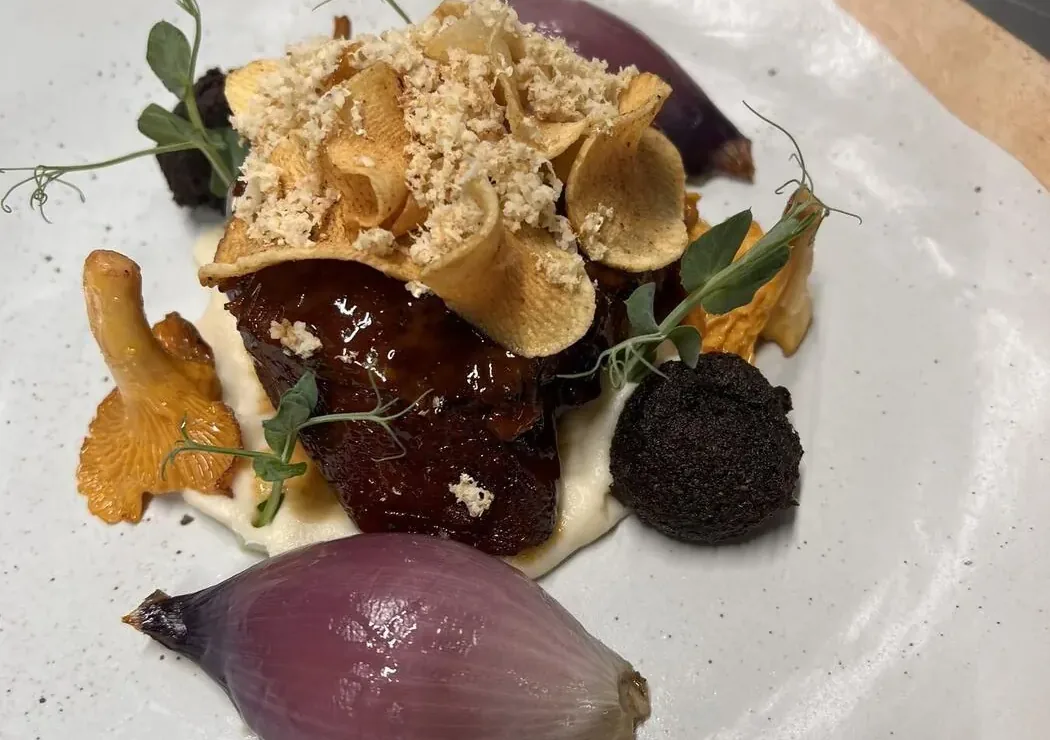
Basque cuisine is the food of the Basque Country in northern Spain, built on exceptional local produce, simple technique and fire. Its best-known dishes are pintxos, txuleta (aged beef grilled over embers), bacalao al pil-pil, marmitako and Basque cheesecake. The idea is to choose very good ingredients and let them taste of themselves.
Alejandro Nicolau, a London private chef trained under Martin Berasategui in San Sebastián, cooks Basque-inspired menus for dinner parties, events and tasting dinners. This guide explains what defines the cuisine and how its ideas translate to a table at home.
01What is Basque cuisine?
The Basque Country sits between the Bay of Biscay and the Pyrenees, so the cooking draws on both sea and mountain: hake, anchovies and cod on one side, beef, sheep cheese and peppers on the other. It is often described as one of the most food-focused regions in Europe, with a culture of cooking clubs, cider houses and a high density of acclaimed restaurants.
What links the dishes is a philosophy rather than a recipe: buy the best ingredient you can, cook it with care and add as little as possible.
02What are the signature Basque dishes?
- Pintxos: small bites served on bread or on a cocktail stick, usually eaten standing at a bar. See pintxos vs tapas for the difference.
- Txuleta: a thick, aged bone-in beef chop, grilled over charcoal or embers and served simply with salt.
- Bacalao al pil-pil: salt cod cooked gently in olive oil until the gelatine forms a creamy emulsion.
- Marmitako: a tuna and potato stew with peppers, traditionally a fishermen's dish.
- Kokotxas: hake cheeks in a green parsley sauce, delicate and silky.
- Basque cheesecake: a burnt-top, creamy cheesecake that has become popular far beyond Spain.
Many of these are a good fit for a dinner party because they are shared, generous and easy to serve family style.
03Which ingredients define the Basque kitchen?
- Piparras and Gernika peppers: small green peppers, fried until blistered and salted.
- Idiazabal cheese: a smoky sheep cheese, often eaten with quince.
- Anchovies and sardines: served cured, marinated or grilled.
- Txakoli: a crisp, lightly sparkling white wine poured from a height.
- Cider: natural Basque cider, traditionally drunk in cider houses with txuleta and cod omelette.
- Olive oil, garlic and parsley: the base of many sauces.
04How do Basque chefs cook?
Technique is precise but rarely showy. Grilling over wood or charcoal is central, from whole turbot to beef. Slow emulsions, such as pil-pil, depend on temperature control rather than added thickeners. Marinades are short and seasoning is careful.
Modern Basque chefs, including those at the top of the region's tasting-menu scene, apply the same restraint to more technical dishes. See training in San Sebastián and how it shapes a chef's cooking and the story behind Spain's Michelin-trained chefs.
05How do you cook Basque food at home?
- Start with one great ingredient. Good beef, fresh hake or ripe peppers need very little.
- Keep the sauce simple. Olive oil, garlic, parsley and good stock go a long way.
- Grill or roast with confidence. A hot pan or barbecue with plenty of salt is enough for most cuts.
- Serve in the middle of the table. Shared plates suit the Basque way of eating.
- Pair with the right drink. Txakoli with seafood and cider with beef are the classics.
For menu ideas, see best Spanish dishes for a dinner party at home.
06What is the Basque way of eating?
Eating in the Basque Country is a social activity with its own rhythm. In the old town of San Sebastián, people move from bar to bar, ordering one pintxo and one small drink at each before moving on. This keeps the evening light, sociable and varied, and it is a style that translates well to a drinks reception or a standing dinner at home.
Lunch is the main meal of the day and can be long. Cider houses serve a set menu of cod omelette, grilled cod, txuleta and cheese with quince, with cider drawn straight from the barrels. Food clubs, known as txokos, are private societies where members cook for each other, which says a lot about how seriously the region takes home cooking.
07How does Basque cuisine influence modern fine dining?
The region is known internationally for its tasting-menu restaurants, many of which have earned Michelin recognition. Their cooking is technical but rooted in the same principles as the home kitchen: seasonal produce, careful temperature control and sauces that taste clearly of their main ingredient.
That influence reaches London, where chefs trained in the Basque Country bring the same discipline to private dinners. Our guide to how tasting menus are designed from scratch shows how the approach works course by course, and the menus page shows sample menus for different occasions.
08Can a private chef cook Basque food at your event?
Yes. Basque-inspired menus work for dinner parties, tasting dinners, weddings and corporate events, from pintxos at a drinks reception to a grilled main and cheesecake to finish.
See Spanish private chef in London and authentic Spanish tasting menus in London, then send your date and guest count through the enquiry form for a tailored proposal.
Planning an event and want the food and drinks taken care of? Send the date, guest count and any requirements through the enquiry form and the team will reply within 24 hours.
Plan Your EventExplore: Spanish private chef London, private chef for dinner parties, hire a private chef in London.